Friday, October 16, 2009

This is Your Brain on Google


A brain study conducted by Dr. Gary Small, a UCLA expert on aging, found that people who search the Internet use more of their brain while engaging in Internet searching.

This suggests that just searching on the Internet may train the brain -- that it may keep it active and healthy," said Small, whose research appears in the American Journal of Geriatric Psychiatry.


To continue reading go here.

By Bob DeMarco
Alzheimer's Reading Room
Editor


Popular articles on the Alzheimer's Reading Room

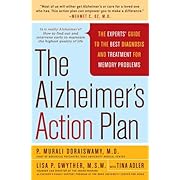
The Alzheimer's Action Plan: The Experts' Guide to the Best Diagnosis and Treatment for Memory Problems

Bob DeMarco is the editor of the Alzheimer's Reading Room and an Alzheimer's caregiver. The Alzheimer's Reading Room is the number one website on the Internet for news, advice, and insight into Alzheimer's disease. Bob has written more than 800 articles with more than 18,000 links on the Internet. Bob resides in Delray Beach, FL.

Original content Bob DeMarco, Alzheimer's Reading Room

Read More...

Tuesday, October 6, 2009

Popular Articles on the Alzheimer's Reading Room -- September (Top Landing Pages)

Test Your Memory (TYM) for Alzheimer's or Dementia in Five Minutes (#1 June, July, August, September)
A new cognitive test for detecting Alzheimer's disease is quicker and more accurate than many current tests, and could help diagnose early Alzheimer's, dementia, or mild cognitive impairment.
To continue reading go here.

Dementia and the Eight Types of Dementia
Dementia is a an illness that usually occurs slowly over time, and usually includes a progressive state of deterioration. The earliest signs of dementia are usually memory problems, confusion, and changes in the way a person behaves and communicates.
To continue reading go here.

Five Ways to Keep Alzheimer's Away
A recently released study showed that regular exercise is one of the best ways to reduce your risk of dementia and can help slow progression of Alzheimer's disease. Less well known is the fact that if you have a big belly in middle age the chances that you could suffer from dementia are tripled.
To continue reading go here.

The Combination of Aricept and Namenda Helps Slow the Rate of Decline in Alzheimer's Patients
"The results of this study should change the way we treat patients with Alzheimer's disease. Cholinesterase inhibitors are approved for use in mild to moderate dementia, while memantine has been approved for advanced dementia. But it looks like there is an advantage in prescribing both drugs as initial treatment."--John Growdon, MD
To continue reading go here.

A Simple Three Minute Test Can Detect the Earliest Stage of Alzheimer's Disease
The study shows that the combination of a very brief three-minute cognitive screening test, called the Mini-Cog (MC), with a Functional Activities Questionnaire (FAQ) -- administered to a family member or friend -- could accurately identify individuals with MCI and undiagnosed dementia.
To continue reading go here.

Subscribe to The Alzheimer's Reading Room--via Email


Bob DeMarco is the editor of the Alzheimer's Reading Room and an Alzheimer's caregiver. The Alzheimer's Reading Room is the number one website on the Internet for news, advice, and insight into Alzheimer's disease. Bob has written more than 800 articles with more than 18,000 links on the Internet. Bob resides in Delray Beach, FL.
Popular articles on the Alzheimer's Reading Room

The 36-Hour Day: A Family Guide to Caring for People with Alzheimer Disease, Dementia, and Memory Loss


Original content Bob DeMarco, Alzheimer's Reading Room

Read More...

Saturday, August 9, 2008

TauRx Therapeutics-- New treatment halts progress of Alzheimer's disease

The results of the Phase 2 study of TauRx's new treatment strongly suggest that it is possible to halt progression in mild and moderate Alzheimer's. TauRx is continuing to refine its treatment and hopes that restoration may be possible at least at the earlier stages with improved versions of its drug. Tangles are already destroying nerve cells in parts of the brain critical for memory in people in their fifties and upwards. The ultimate goal is to develop a product that is convenient for patients that could be widely used at the very earliest stages of the disease, long before patients experience the first symptoms of Alzheimer's.
 blog it


Read More...

Friday, August 31, 2007

Magnetoencephalography (MEG)


This development has wonderful implications for diagnosing Alzheimer's; it has far reaching implications for those predisposed by genetics to Alzheimer's disease.

Read this article at the Alzheimer's Reading Room

Read More...

Wednesday, May 9, 2007

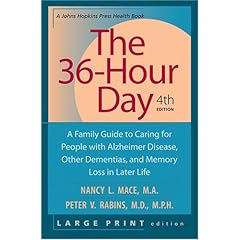
The 36-Hour Day: A Family Guide to Caring for People with Alzheimer Disease, Other Dementias, and Memory Loss in Later Life


This best-selling book is the "bible" for families caring for people with Alzheimer disease...


Read the full text review at The Alzheimer's Reading Room

Read More...